Bacteriostatic Water Volume for a Retatrutide 10mg Vial
How bacteriostatic water volume for a retatrutide 10mg vial changes final concentration, with worked mg/mL and mcg/unit conversions for common dilution amounts.
Reviewed by Priya Nair, MD, physician, metabolic medicine ·
Priya Nair, MD is a physician with subspecialty training in metabolic disorders and obesity medicine, bringing over a decade of clinical practice expertise to educational content on investigational peptide therapeutics.
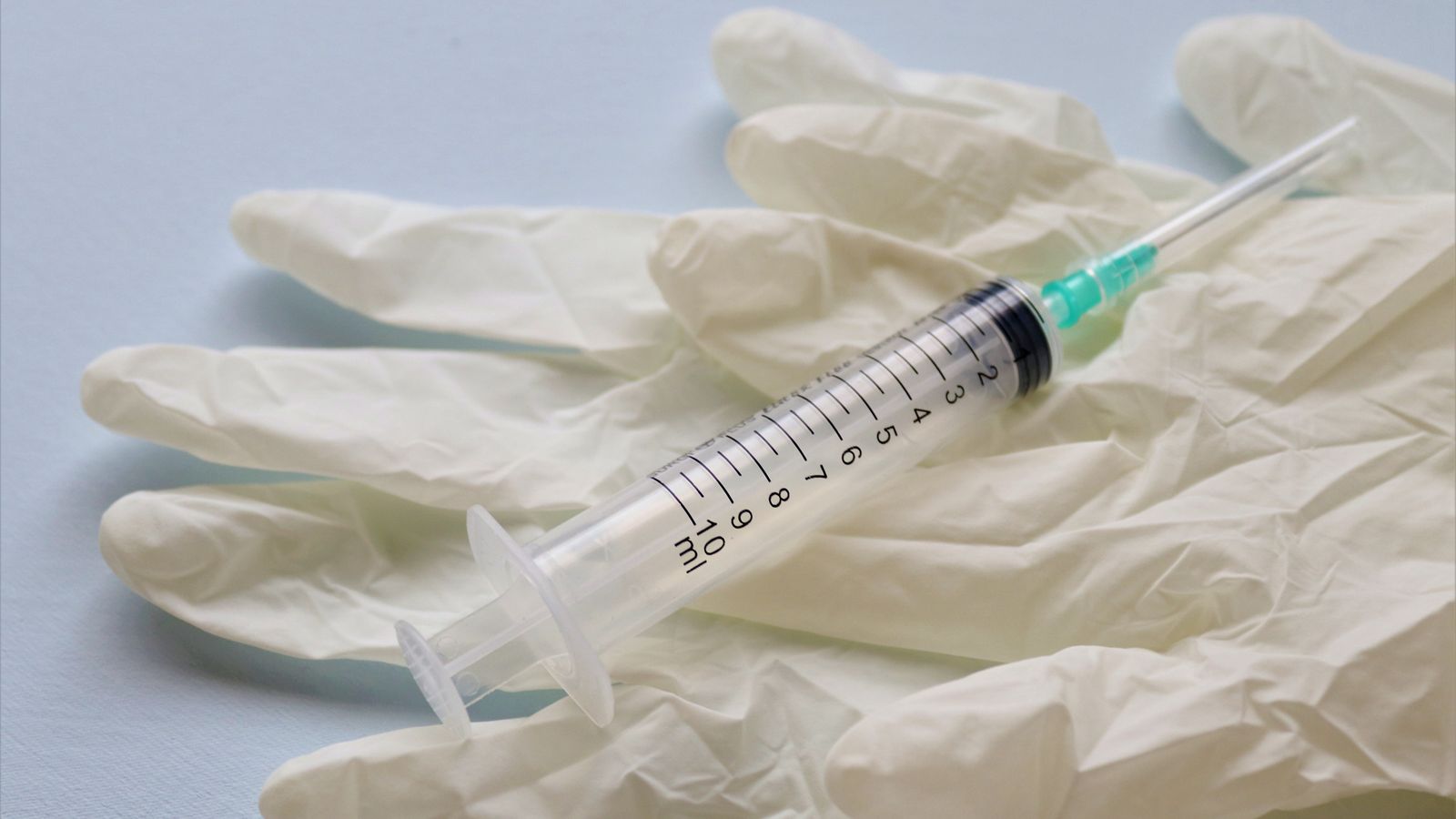
The bacteriostatic water volume for a retatrutide 10mg vial determines the final solution concentration, not the total amount of peptide in the vial. Adding more diluent lowers the concentration per milliliter; adding less raises it. The vial’s labeled 10mg content stays fixed regardless of how much bacteriostatic water is added — only the concentration and the corresponding syringe-unit reading change.
Why Volume Choice Changes the Math, Not the Contents
A 10mg vial contains 10mg of lyophilized peptide before any liquid is added. Bacteriostatic water is a diluent: it dissolves the lyophilized powder into a liquid solution but adds no additional peptide mass. This means every dilution volume for the same 10mg vial produces a mathematically different concentration, expressed as milligrams per milliliter (mg/mL).
The general relationship is:
concentration (mg/mL) = total vial mg ÷ mL of bacteriostatic water added
A smaller volume of bacteriostatic water concentrates the peptide into fewer milliliters, so each 0.01 mL on a syringe represents more peptide. A larger volume spreads the same 10mg across more liquid, so each syringe increment represents less. Neither choice changes total vial content — only how that content is distributed across volume.
Worked Example: 10mg Vial at Several Dilution Volumes
Retatrutide is commonly discussed alongside U-100 insulin syringes, where 1 mL of solution corresponds to 100 marked units. Converting a concentration into a per-unit figure uses that relationship: divide the mcg/mL figure by 100 to get mcg per syringe unit.
The table below recalculates this for a 10mg vial across several bacteriostatic water volumes.
| Bacteriostatic water added | Concentration (mg/mL) | Concentration (mcg/mL) | mcg per U-100 unit |
|---|---|---|---|
| 1 mL | 10 mg/mL | 10,000 mcg/mL | 100 mcg/unit |
| 2 mL | 5 mg/mL | 5,000 mcg/mL | 50 mcg/unit |
| 3 mL | 3.33 mg/mL | 3,333 mcg/mL | 33.3 mcg/unit |
| 5 mL | 2 mg/mL | 2,000 mcg/mL | 20 mcg/unit |
Take the 2 mL row as a fully worked example. Starting from a 10mg vial: 10mg ÷ 2mL = 5mg/mL. Converting to micrograms, 5mg/mL × 1000mcg/mg = 5,000mcg/mL. Dividing by 100 units per milliliter on a U-100 syringe gives 5,000 ÷ 100 = 50mcg per marked unit. Each figure in the table follows the same two-step process: divide vial mg by diluent mL for concentration, then divide by 100 to translate that concentration into a per-unit figure on a U-100 syringe.
Reading Listings and Labels Correctly
Peptide vial listings and reconstitution charts typically state bacteriostatic water volume as a suggested reference point rather than a fixed requirement, because the “correct” volume depends entirely on what concentration a given protocol or record-keeping system is built around. A listing that references a 2 mL bacteriostatic water volume for a 10mg vial is describing a 5mg/mL solution — the same arithmetic shown above, just presented as a finished figure rather than a calculation.
When comparing listings or vial documentation across sources, it helps to normalize everything back to mg/mL before comparing, since two sources describing the “same” vial can quote different volumes and non-technical readers may assume the vials themselves differ in content. They usually don’t — the vial size is identical; only the diluent volume, and therefore the concentration, differs.
Bacteriostatic Water Characteristics Worth Understanding
Bacteriostatic water differs from plain sterile water in that it contains a small amount of benzyl alcohol, which is included specifically to inhibit bacterial growth across repeated vial entries. This is why bacteriostatic water is the diluent referenced in most retatrutide vial documentation rather than single-use sterile water — a vial reconstituted with bacteriostatic water is designed around multiple withdrawals over its labeled storage window, while single-use sterile water is intended for immediate, one-time use.
Documentation for a given vial will typically specify bacteriostatic water rather than an interchangeable alternative, since the benzyl alcohol content is part of what the storage-duration references in that documentation are based on. Swapping to a different diluent changes that basis, which is part of why source documentation should be checked against the specific diluent named rather than assumed.
Cross-Checking Vial Records and Source Documentation
Because concentration depends on a volume decision made at reconstitution rather than anything printed on the vial itself, tracking which bacteriostatic water volume was used for a given vial is part of maintaining an accurate record. A vial with no documented reconstitution volume attached is effectively missing the information needed to interpret any subsequent mg/mL or per-unit figure describing it. This is one reason batch and vial documentation for retatrutide is worth checking directly against a COA-verified source rather than relying on a secondhand description of what a given vial contains.
Researchers comparing reconstitution notes across labs or sourcing channels sometimes find it useful to cross-reference figures with a dedicated peptide reconstitution calculator such as peptcalc.com, which performs the same mg-to-mcg-to-unit conversion shown above for arbitrary vial sizes and diluent volumes. For broader reference material on retatrutide handling and terminology, Reta Online maintains related documentation within this same network.
Summary
Bacteriostatic water volume for a retatrutide 10mg vial is a concentration decision, not a content decision — the vial still contains 10mg either way. Smaller diluent volumes produce higher mg/mL concentrations and larger per-unit values on a U-100 syringe; larger volumes produce the opposite. Working through the same two-step conversion — vial mg divided by diluent mL, then divided by 100 for a per-unit figure — makes it possible to read any listed dilution volume as a concrete concentration rather than an isolated number, and to compare vial documentation across sources on equal terms.
A note on how to read this
This article is written for research and educational reference. The materials described are sold for laboratory research and are not for human consumption. Nothing here is dosing guidance, a prescription, or a clinical recommendation.