Retatrutide Cake Appearance: What 5 Listing Phrases Cover
Listings describe retatrutide cake appearance in five stock phrases; none is a purity figure. A 10 mg vial holds 10 mg of solid if excipient-free.
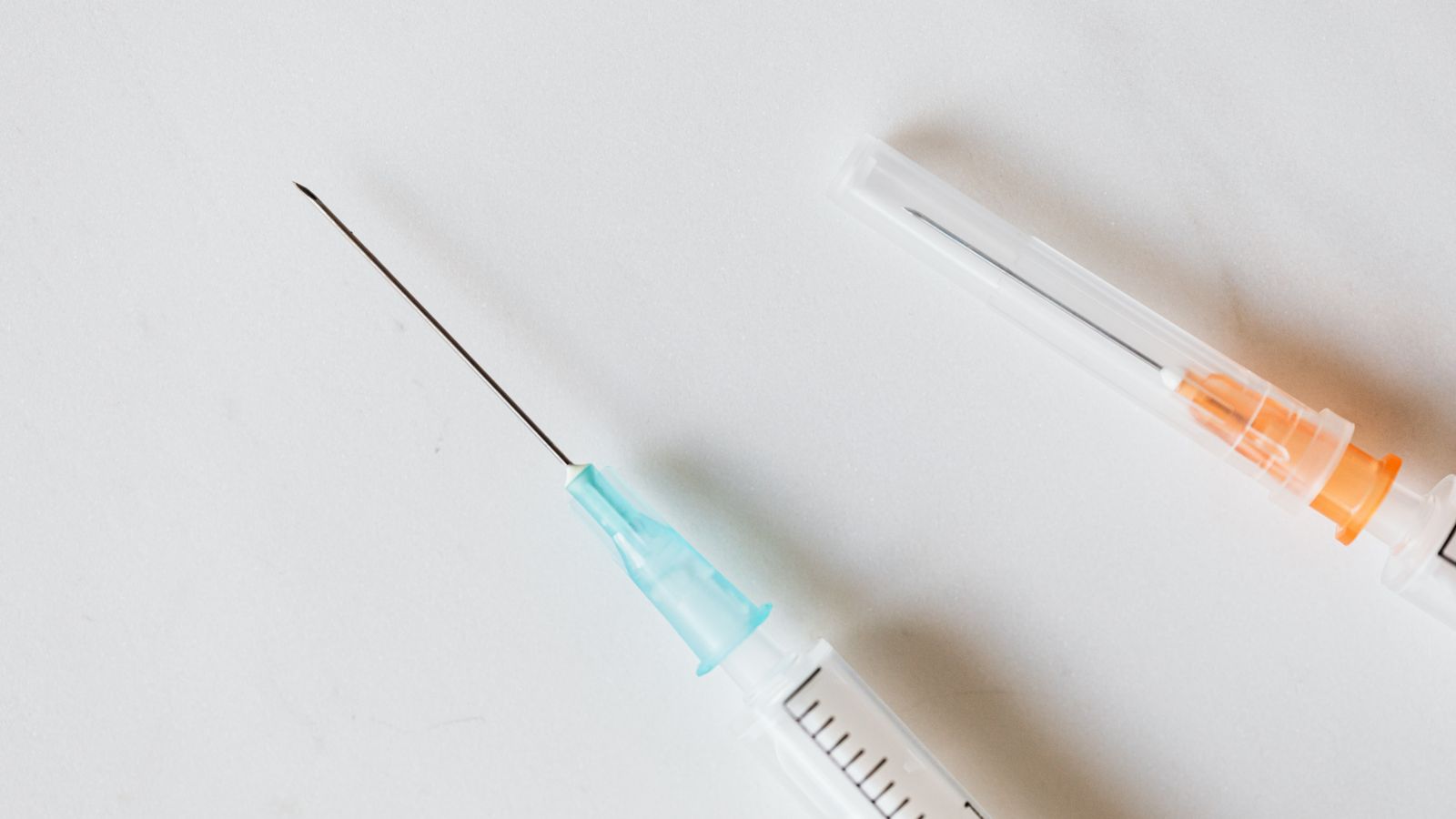
Retatrutide listings describe lyophilized cake appearance with a small set of stock phrases: “white to off-white lyophilized powder,” “lyophilized cake,” “crisp” or “uniform” cake, “fluffy white powder,” and “excipient-free freeze-dried solid.” Each phrase claims a color range and a physical form. None of them carries a purity, potency, or water-content figure, and none can be confirmed from the stock photograph on a listing page. What arrives in the vial is a shipping-condition check, not an analytical result.
That distinction decides how much weight the descriptor deserves. A supplier who writes “uniform white cake” has committed to an appearance spec you can falsify by looking; a supplier who writes nothing about appearance has committed to nothing, which is common and not by itself a defect.
What wording do listings use for the cake?
The five phrasings below cover almost everything a retatrutide listing says about the solid in the vial. The differences between them are narrow, and the useful question for each is which document can actually check the claim.
| Listing phrase | What it asserts | What it does not exclude | Where it can be checked |
|---|---|---|---|
| White to off-white lyophilized powder | a color range and a dry state | shrinkage, cracking, partial collapse, high residual moisture | appearance line plus water content on the COA |
| Lyophilized cake | the solid holds a shape formed against the vial floor | color drift, a melt-back layer at the base | appearance line on the COA |
| Crisp, uniform cake | no collapse, even structure across the cake | wrong mass, wrong identity | potency and identity results (HPLC, MS) |
| Fluffy white powder | a low-density solid rather than a fused disc | that the solid is peptide rather than bulking agent | excipient statement and net peptide content |
| Excipient-free freeze-dried solid | the entire visible solid is the labeled peptide mass | that the labeled mass survived transit inside the vial intact | net peptide content on the COA |
Table 1: the five cake-appearance phrasings used in research retatrutide listings, matched to the document that can verify each. Descriptor language only; no numeric claim is made in this table.
What can a cake inspection actually rule out?
Eight checks, in the order they are worth doing, on material sold for research use only. Each one has a visible answer, which is what separates them from a general instruction to inspect the vial.
- Where the solid sits. All of it should be on the vial floor. Powder on the stopper face, in the neck, or under the crimp means the vial moved while the contents were unfrozen, and it means part of the labeled mass will not dissolve into the volume you add.
- Whether the cake is intact. An intact disc, a collapsed disc, and a cake that has pulled back from the glass wall are three visibly different states. Collapse points at the freeze-drying cycle or at a thermal excursion in transit, not at the peptide’s identity.
- A melt-back layer. A translucent or glassy zone at the base of the cake indicates the product melted and re-solidified rather than subliming. It is the one defect that a cake photo taken at the supplier cannot hide, because it changes how light passes through the base.
- Color against the stated range. White to off-white is the claim in every phrasing in Table 1. A yellow, pink, or brown cast is a deviation from that spec and belongs in the record with the lot number.
- Uniformity across vials of one lot. Two vials from the same lot should look the same. A visible difference inside a single lot locates the cause in the process, not the formulation.
- Any free liquid. A lyophilized vial should hold no droplets and no beading on the glass. Liquid means a seal failure or an incomplete cycle.
- Whether the visible solid matches the labeled mass. A 10 mg excipient-free vial contains 10 mg of solid, which is 0.01 g, and that reads as a thin film or a scatter of flakes rather than a full plug. A tall, full-diameter plug in a vial labeled excipient-free 10 mg means the solid includes something other than 10 mg of peptide.
- How it dissolves. The cake is the pre-test; the solution is the test. Cloudiness or visible particles after the solid has fully gone into the diluent is the recordable deviation, and it goes in the log separately from the dry appearance because storage rules change after reconstitution.
None of the eight produces a purity number. Purity, identity, and water content come from HPLC, mass spectrometry, and a loss-on-drying or Karl Fischer result, which is why what a COA actually reports outranks any visual read of the cake.
How much solid is in a 10 mg vial versus a 20 mg vial?
Cake size tracks the labeled mass, and the two catalog formats differ by a factor of two: 20 mg ÷ 10 mg = 2, so the 20 mg vial’s cake covers more floor or stands taller in the same footprint. Price per mg moves the other way.
| Labeled content (mg) | Price (USD) | Price per mg (USD) | Solid mass if excipient-free (mg) |
|---|---|---|---|
| 10 | 100 | 10.00 | 10 |
| 20 | 195 | 9.75 | 20 |
Table 2: retatrutide vial formats, prices as of September 2026 from the HEEZ catalog, with price per mg computed as price ÷ labeled mg ($100 ÷ 10 = $10.00; $195 ÷ 20 = $9.75, a $0.25/mg difference). The last column restates the labeled mass, which equals the whole visible solid only where the listing states the vial is excipient-free.
The labeled content is also the only figure a visual check can be measured against, and a listing such as the one for this retatrutide vial publishes that number and the format before any cake is in front of you.
The arithmetic that follows a cake inspection makes the point concrete. A 10 mg vial reconstituted with 2 mL of bacteriostatic water gives 10 mg ÷ 2 mL = 5 mg/mL. On a U-100 syringe, where 1 mL = 100 units, 0.1 mL is 10 units and holds 5 mg/mL × 0.1 mL = 0.5 mg, or 500 mcg. Every one of those figures assumes the full 10 mg went into solution. If step 1 of the checklist found powder under the crimp, 5 mg/mL is an assumption rather than a measurement, and so is everything downstream of it. The choice of diluent volume is a separate decision, covered in how much diluent a 10 mg vial takes.
Does cake appearance say anything about trial-grade retatrutide?
No, and the published record shows why the two are not comparable. The phase 2 obesity trial of retatrutide randomized 338 adults to once-weekly subcutaneous retatrutide or placebo for 48 weeks, with least-squares mean body-weight change at 24 weeks of -17.5% in the 12 mg group against -1.6% with placebo, a 15.9-percentage-point separation (17.5 - 1.6) inside a single trial. The phase 2 type 2 diabetes trial ran across 42 centres in the USA, randomized 281 participants with 275 in the efficacy analyses, and reported HbA1c change at 24 weeks of -2.02% in the 12 mg escalation arm versus -0.01% with placebo.
Both programs used sponsor-manufactured drug product at arm-level doses between 0.5 mg and 12 mg, released against a full specification before any vial reached a site. A research vial’s cake cannot be traced to that material by looking at it. The visual descriptors in Table 1 and the trial figures above describe different objects: one is a packaging outcome, the other is a released clinical drug product.
What do you record when a cake looks wrong?
Five fields make a deviation reusable later: lot number, the phrase the listing used for appearance, what you actually saw, the date, and whether the shipment arrived with intact cold packaging. A note that says “cake collapsed” without the listing’s own wording next to it cannot be argued with the supplier, because there is nothing to compare it against.
Photograph the vial before the first needle entry. Cake appearance is the one specification on the vial that is destroyed by the act of testing it, and the remaining headspace above the cake is the only physical trace of the original fill left once diluent is in.
A note on how to read this
This article is written for research and educational reference. The materials described are sold for laboratory research and are not for human consumption. Nothing here is dosing guidance, a prescription, or a clinical recommendation.