Retatrutide COA Assay Method: HPLC vs MS vs Content
Assay method on a retatrutide COA names which test produced which number: RP-HPLC purity %, mass spec identity, and content assay actual mg.
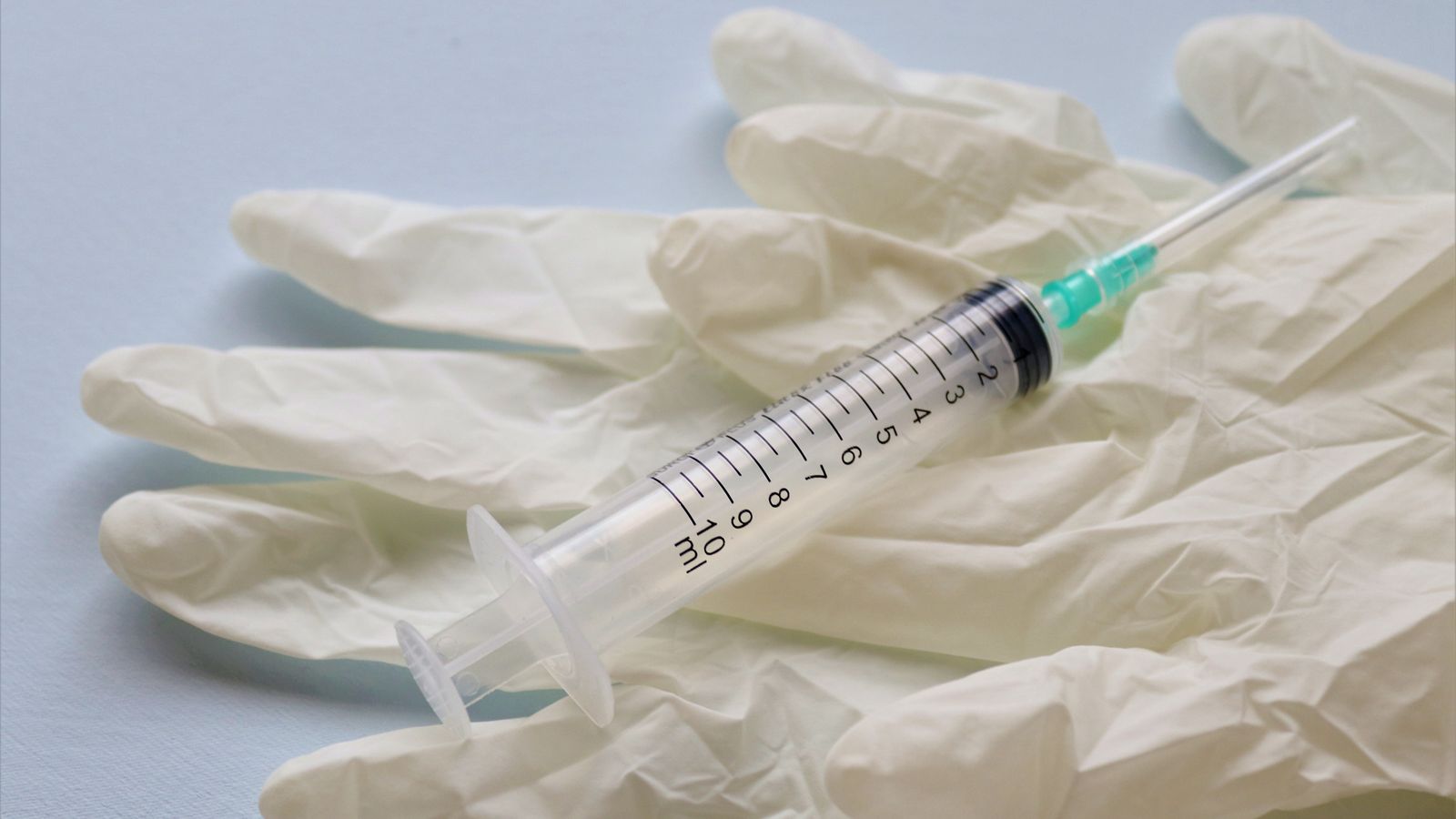
On a retatrutide listing, the assay method is the name of the analytical procedure that produced the number printed next to it, and the word covers two different measurements. A purity assay by reversed-phase HPLC reports area percent: the main peak’s share of everything the detector registered. A content or potency assay reports mass: how much peptide the vial actually holds against its label. A listing that prints “assay: 99.2%” with no method named has not said which of the two it means, and the two answer different questions about the same lot.
Which assay method reports which number?
| Assay name on the COA | What the number measures | Unit reported | What it cannot establish |
|---|---|---|---|
| RP-HPLC (purity) | Main peak area as a fraction of all detected peak area | area % | How much peptide mass is in the vial; which molecule the peak is |
| LC-MS or MALDI-TOF (identity) | Measured molecular mass against the theoretical mass | Da (or m/z) | Purity, or how much material is present |
| Content / potency assay (amino acid analysis, quantitative HPLC against a reference standard) | Absolute peptide mass recovered, stated against label claim | mg per vial, or % of label | Which impurities make up the remainder |
| Karl Fischer | Residual water held by the lyophilised cake | % w/w | Anything about peptide identity or peak purity |
| Ion chromatography (counter-ion) | Residual trifluoroacetate or acetate bound to the peptide | % w/w | Peak purity; this mass is non-peptide mass that still weighs |
| LAL (endotoxin) | Bacterial endotoxin burden | EU/mg | Any chemical attribute of the peptide |
Table: what each assay name on a retatrutide COA measures and what that method leaves unanswered. The rows describe standard analytical reporting conventions for lyophilised peptides; no figure in this table is a lot-specific claim.
The practical consequence is that purity and content are not substitutes. A lot can read high on RP-HPLC purity and still return under its labelled milligrams on a content assay, because water and counter-ion sit outside the chromatographic peak comparison but inside the vial’s weighed mass. That second figure is what the net peptide content field on a listing is reporting.
How much does the assay percentage change the vial’s real content?
Work it with the reader’s own figures. Take a vial labelled 10 mg whose COA reports a content assay of 92.0% of label claim. That 92.0% is an assumed input for this example; substitute the value on your own lot’s document.
- Peptide mass: 10 mg × 0.920 = 9.2 mg
- Reconstituted with 2 mL bacteriostatic water: 9.2 mg ÷ 2 mL = 4.6 mg/mL, against a nominal 10 mg ÷ 2 mL = 5.0 mg/mL
- On a U-100 syringe, 1 mL = 100 units, so 1 unit = 0.01 mL. At 4.6 mg/mL that is 4.6 mg ÷ 100 = 0.046 mg, or 46 mcg per unit (1 mg = 1000 mcg), against a nominal 50 mcg per unit
- A 10-unit draw planned as 0.5 mg delivers 0.10 mL × 4.6 mg/mL = 0.46 mg, short by 0.04 mg, which is 0.04 ÷ 0.5 = 8%
An 8% shortfall is invisible on the label and invisible in the purity percentage. It appears only in the content assay line. If you are converting vial figures into working concentrations regularly, a reconstitution calculator does the same arithmetic without the transcription errors.
The mg figures in the retatrutide literature are amounts of the peptide itself, which is why the content assay is the line that connects a vial to them. The phase 2 obesity trial randomised 338 adults to once-weekly subcutaneous retatrutide at 1 mg, 4 mg, 8 mg or 12 mg over 48 weeks, with a primary endpoint of percent body-weight change at 24 weeks, reported as -17.5% in the 12 mg group against -1.6% for placebo (the 2023 NEJM retatrutide phase 2 trial report). These are research figures from a clinical program; the material described on supplier listings is research use only.
What does a purity number leave out when the method is unnamed?
Area percent depends on what the detector can see. A UV detector set in the low-UV region responds to the peptide bond, so a co-eluting non-peptide contaminant with no absorbance there contributes nothing to the denominator and cannot lower the purity figure. Salt does not show up. Residual solvent does not show up.
Gradient conditions matter for the same reason. A shallow gradient resolves closely related deletion sequences into separate peaks and drops the stated purity; a steep one can bury them under the main peak and raise it. Two labs can run the same lot and publish different purity numbers without either being wrong, which is why a COA that names the column chemistry, the mobile-phase modifier, the gradient and the detection wavelength is a stronger document than one that states “HPLC” alone. Method disclosure belongs in the field list a complete COA carries.
Where a listing quotes a purity figure and a content figure that disagree in direction, report both rather than picking the flattering one. A high area percent with a low content result is a consistent picture, not a contradiction: it describes clean peptide that is diluted by water and counter-ion.
Why does identity assay matter for a triple agonist?
Retatrutide activates the glucose-dependent insulinotropic polypeptide, GLP-1 and glucagon receptors, and the phase 3 TRIUMPH program is assessing weekly subcutaneous administration against placebo in over 5800 participants across four randomised, double-blind studies (the TRIUMPH phase 3 trial design paper). A purity assay cannot tell those receptor activities apart, because it never asks what the peak is.
Mass spectrometry does ask. The identity line on a COA states a measured mass and compares it against the theoretical mass calculated from the sequence, and a mismatch flags a different molecule regardless of how clean the chromatogram looked. Any COA that reports purity with no identity assay has confirmed that something in the vial is 99% of itself.
Some listings publish a safety data sheet in place of a COA, which is a different document class entirely and carries no lot results at all. The distinction between a hazard sheet and a test record is worth checking before treating a PDF as analytical evidence.
What should you ask for when the listing only says “assay: 99%”?
Run these five checks against the document, in order:
- Does the number carry a method name next to it, not just the word “assay”?
- Is there a second, separate figure for content or net peptide, distinct from the purity percentage?
- Does the COA report a measured mass and a theoretical mass, with both printed?
- Does the batch or lot number on the document match the number on the vial you hold?
- Are water content and counter-ion content stated, or silently absent from the mass account?
A document that fails check 2 is reporting one measurement under a word that implies two. Ask the supplier for the lot’s chromatogram with the gradient conditions printed on it, and for the reference standard the content assay was quantified against.
A note on how to read this
This article is written for research and educational reference. The materials described are sold for laboratory research and are not for human consumption. Nothing here is dosing guidance, a prescription, or a clinical recommendation.