Aluminum Seal Integrity: What a Retatrutide Listing Claims
On a retatrutide listing, aluminum seal integrity means the crimp still compresses the stopper onto the glass: an inspection result, not a leak test.
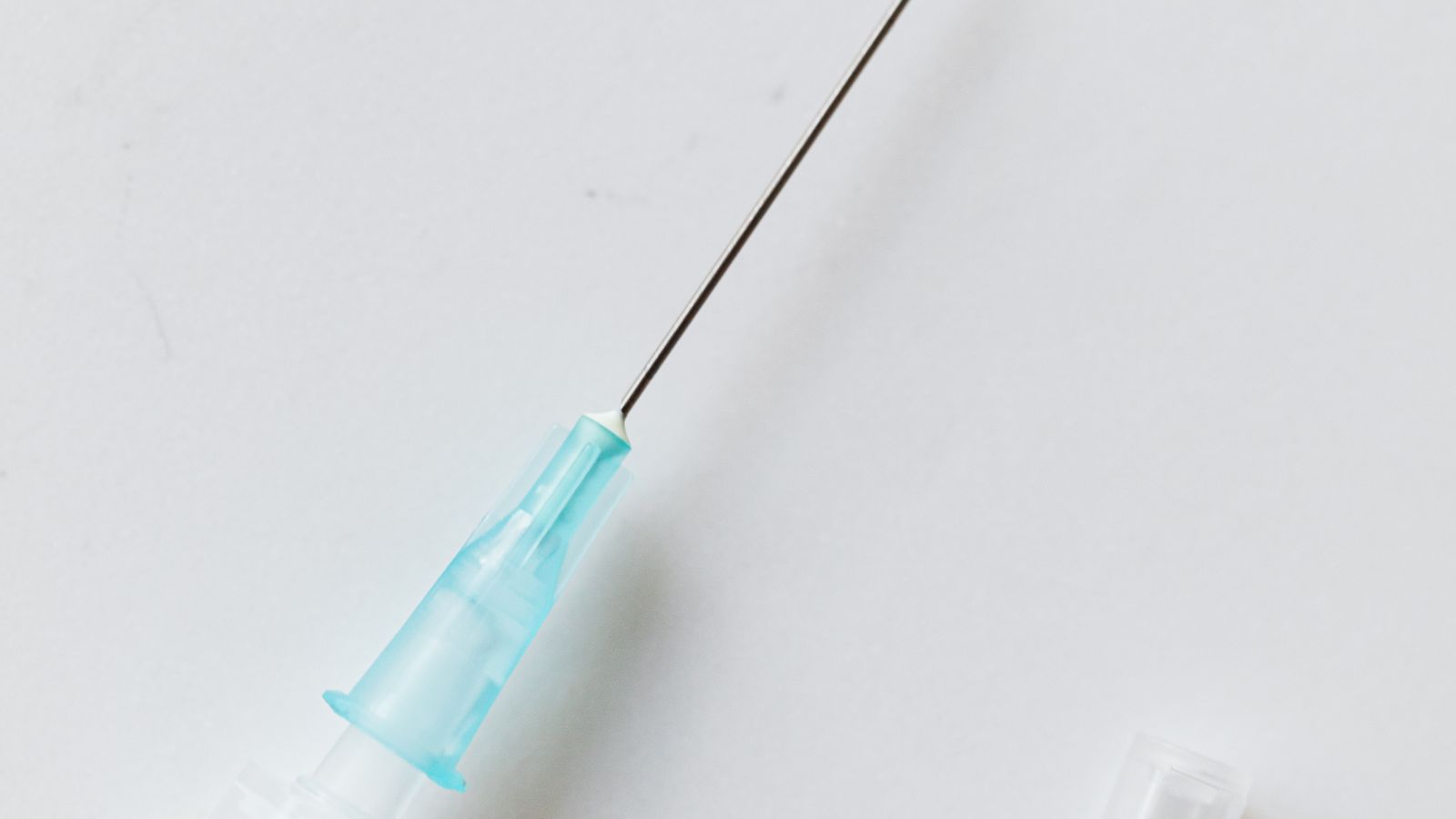
Aluminum seal integrity on a retatrutide vial listing means the crimped aluminum cap still holds the rubber stopper compressed against the glass sealing surface, and that nothing has released that compression. It describes the container, not the peptide inside it. Treat the phrase as an inspection result reported at pack-out unless the supplier names a leak-test method and the limit it was tested against, which most listings never do.
What does the aluminum cap actually seal?
The aluminum seals nothing on its own. The stopper does the sealing, and the crimp exists to keep the stopper loaded against the glass finish for the life of the vial. Remove the compression and the elastomer relaxes off the sealing surface; the metal skirt is the spring that prevents it.
That is why a rotation check outranks a visual one. A cap that spins freely against the vial finish has lost crimp load, which means the stopper is being held by friction and its own memory rather than by the closure. The vial can look flawless and still be open in the only sense that matters.
The plastic flip-off button is not part of the seal. It sits on top of the aluminum and comes away by design, leaving the crimped skirt and the exposed stopper face behind. Its colour is a supplier inventory choice, and what a crimp cap colour indicates is routinely misread as a quality grade, which it is not.
What is a breached seal worth on a retatrutide vial?
Integrity is a per-container property, so a failed crimp writes off the whole vial rather than a single withdrawal. That makes vial format a risk decision as well as a price decision, and the arithmetic is short:
- Cost per mg = vial price ÷ vial mg
- Withdrawals per vial at a 4 mg withdrawal size = floor(vial mg ÷ 4)
- Cost per 4 mg withdrawal = cost per mg × 4
- Value lost to a breach before first entry = the full vial price
| Vial format | Price (USD) | Cost per mg (USD) | 4 mg withdrawals per vial | Cost per 4 mg withdrawal (USD) | Lost to a pre-entry breach (USD) |
|---|---|---|---|---|---|
| 10 mg | 100 | 10.00 | 2 | 40.00 | 100 |
| 20 mg | 195 | 9.75 | 5 | 39.00 | 195 |
Caption: value at risk behind one crimp, computed with the formulas above. Vial sizes and prices are the 10 mg and 20 mg lyophilized formats in the HEEZ catalog, prices as of September 2026. The 4 mg withdrawal size is one of the once-weekly dose arms in the phase 2 obesity trial reported in the New England Journal of Medicine, which randomized 338 adults to 1 mg, 4 mg, 8 mg or 12 mg subcutaneous retatrutide or placebo for 48 weeks. These figures describe container economics for research-use material, not a dosing schedule.
The 20 mg format is cheaper per mg by $10.00 − $9.75 = $0.25, and it puts ($195 − $100) ÷ $100 = 95% more value behind a single crimp. That is the position worth stating plainly: on the larger format, a supplier’s answer about crimp acceptance criteria is worth nearly twice as much as it is on the small one, so ask for it there first.
How do you check aluminum seal integrity on a vial that arrived?
Six checks, in the order that fails a vial fastest.
- Rotate the cap under light finger pressure. Free rotation against the glass finish means lost crimp load. This is the only check on the list that rejects a vial on its own evidence.
- Run a fingernail around the skirt edge. The curl should be continuous under the flange with no flat segment, gap or lifted arc, which is what an off-centre or under-set crimp head leaves behind.
- Press the flip button seat. A button sitting proud on one side points at an uneven crimp underneath; a button already detached in transit says nothing about the seal, because it never carried it.
- Tilt the vial against a light and read the crimp-to-glass junction. Dried residue, fibres or a film in that seam means the closure area was wet when it was sealed, or that something moved through it afterwards.
- Inspect the glass flange visible below the skirt for chips and hairline cracks. A damaged sealing surface cannot be repaired by more crimp force, and the defect is often on the underside where the skirt hides it.
- Note whether the diluent pulls in on first entry. A vial stoppered under vacuum draws; one that does not may have vented, or may simply have been stoppered at ambient pressure, which is why headspace on a vial listing has to be read before this check means anything.
Checks 1 and 5 are disqualifying. Checks 2 through 4 are grounds for a question to the supplier and a lot note, not an automatic reject, because each has an explanation that does not involve a breach.
Seal integrity claim vs. container closure integrity test: which is on the listing?
Those are two different assertions wearing similar words. Visual and manual inspection confirms the closure looks and behaves as intended at the moment someone looked. A container closure integrity test measures whether the sealed system leaks, using a named method and a stated acceptance limit.
The methods have names, and a supplier who ran one can produce them: vacuum decay, high-voltage leak detection, helium mass-spectrometry leak testing, dye ingress and microbial immersion challenge. The first three are deterministic and report against a measured limit; the last two are probabilistic and report a pass rate across a sample. A listing that says “seal integrity verified” without naming which of those five ran has reported an inspection and called it a test.
Ask for the method and the lot. A CCIT report belongs to a specific fill lot, so a generic quality-page statement covering every product a supplier sells is not evidence about the vial in your hand.
When does the seal integrity claim stop applying?
At first puncture. Once a needle has passed through the stopper, the container is no longer sealed by the crimp alone, and resealing behaviour moves to the elastomer, where the stopper material specification governs what closes behind the needle and how many times it can do so.
The interval that closure has to hold across is weekly. The phase 2 obesity trial above dosed once weekly for 48 weeks, and the TRIUMPH phase 3 program design paper keeps once-weekly subcutaneous administration across four studies in over 5800 participants, so a multi-dose container sits punctured and stored for days at a time between entries rather than being drawn down in one session.
The request that resolves most of this: ask the supplier for the crimp acceptance criteria applied at pack-out, whether the closure and cap lots are recorded on the batch record alongside the peptide lot, and if a CCIT method is claimed, the report for that specific fill lot.
A note on how to read this
This article is written for research and educational reference. The materials described are sold for laboratory research and are not for human consumption. Nothing here is dosing guidance, a prescription, or a clinical recommendation.